


City Risks
Risk Characterization and Assessment
Any natural phenomenon or phenomenon resulting from human activity can trigger risk situations, which is defined as the possibility of an unexpected occurrence of a certain undesirable event, exposing communities to consequent loss of life, property and/or degradation of the surrounding environment.
Mitigating its effects involves a preventive culture that identifies potential risks, calculates the likelihood of occurrence and the damage caused.
In the case of Lisbon, the following risk situations have been identified:
- Serious traffic accidents (air, sea/river, road, rail)
- Accidents in the transportation or storage of dangerous goods
- Collapse of tunnels, bridges and other structures
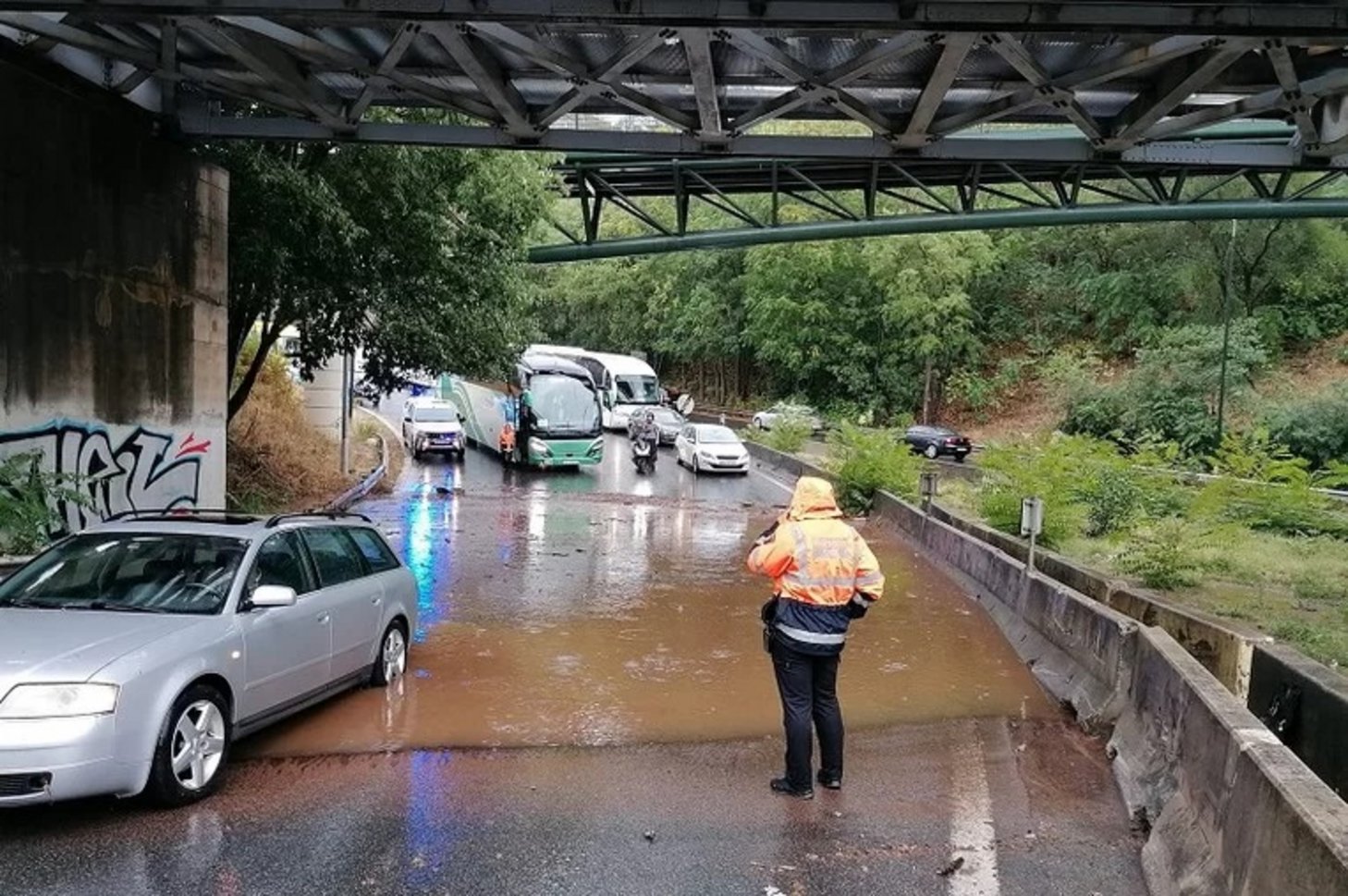
The city's susceptibility to flooding episodes is associated with the occurrence of intense rainfall, with aggravated effects during high tide periods, the geological nature, the type of relief and the high level of soil sealing.
The Flood Vulnerability Chart was drawn up on the basis of extreme rainfall figures provided by the Portuguese Institute for the Sea and Atmosphere (IPMA), georeferencing of flood rescue requests and interventions by the Collectors Brigade, as well as analysis of press reports.
The assessment of the degree of susceptibility to flooding took into account the following variables:
- Direct tidal effect
- Slope
- Degree of permeability
- Hydrology
- Existence of engineering structures
- Sanitation network
By developing various scenarios, it was possible to estimate how the city would behave in the event of flooding and identify the main critical areas. This information is of vital and strategic importance for emergency planning and management, as it enables priority intervention sites to be defined.
The most frequent natural disasters in the city are generally the result of adverse weather conditions. In recent years, there have been increasingly frequent episodes of heavy rainfall, strong winds and extreme temperatures, all of which interfere with the normal functioning of the city.
In spatial terms, given the size of the city and the small number of weather stations, it is not yet possible to define a distribution pattern for the effects associated with this type of situation.
Although, at a national level, rural fires represent the risk that generates the greatest concern, due to the high number of occurrences and the significant damage they cause, the reality in the city of Lisbon is quite different, with a reduction in the number of ignitions and the area burned over the last decade.
According to the Rural Fire Risk Map, a large part of the city's forest area has a very low degree of danger, with only 0.6 ha classified as highly dangerous.
Despite the low level of danger and the small number of occurrences, Lisbon has been stepping up its prevention and surveillance efforts, as well as planning and preparing its response in the event of a fire.
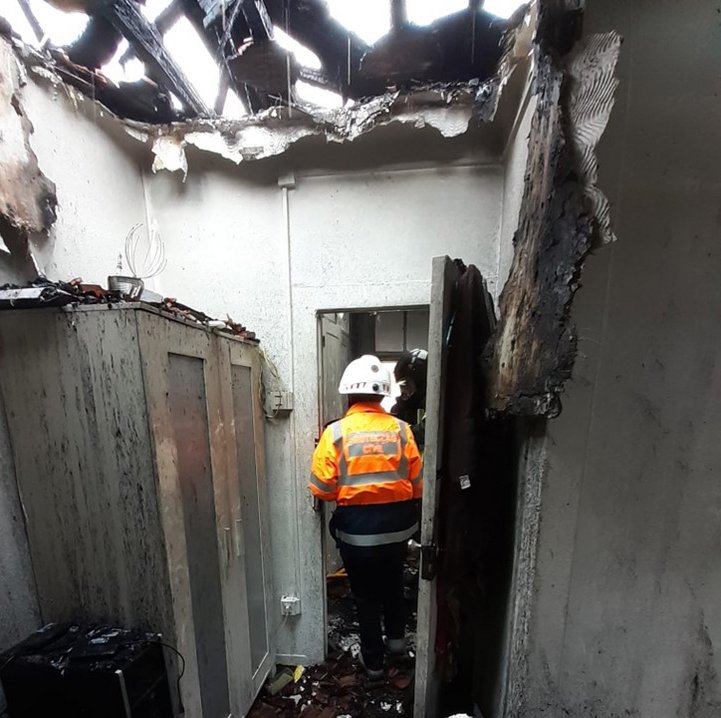
In Lisbon, the risk of urban fire is directly linked to the structural characteristics of the city.
Historic neighborhoods such as Alfama, Mouraria and Bairro Alto, with their dense network of old buildings and difficult access for emergency vehicles, favor the spread of fires and make it difficult to respond quickly and effectively.
This scenario is aggravated by the lack of insulation and fire compartmentalization between units and adjoining buildings, the predominant use of wood in construction and the state of disrepair and overloading of electrical installations.
Population aging and overcrowding, particularly in the older areas of the city, are also factors of vulnerability that contribute to the increased severity of house fires.
The occurrence of slope movements in Lisbon is a relatively frequent phenomenon, especially during periods of higher rainfall, but they don't usually take on a large scale or cause major damage. However, there are historical accounts of larger phenomena, such as the landslide that occurred in Sítio da Bica, on the slope of Chagas, following the earthquake of July 22, 1597. On February 13, 1621, 24 years later, another earthquake caused the slope on the Santa Catarina side to collapse, with the Bica area taking on its current valley shape.
The susceptibility to slope movements is associated with various factors, including the geological nature of the formations, the morphology of the terrain and the presence or circulation of water.
The Slope Mass Movement Susceptibility Chart identifies the areas most susceptible to this phenomenon. It was based on existing information about the geotechnical behavior of the city's soils and rocks, the slope, the position of the water level and known situations of instability. It shows that only small areas of the municipality are significantly susceptible to this phenomenon.
Earthquakes are recurring and unpredictable geological phenomena. These characteristics mean that areas like Lisbon, which have been hit in the past by earthquakes with a strong destructive potential, could be affected in the future. However, it is possible to minimize the damage caused by major earthquakes such as that of 1755 by studying their effects on the earth's surface and applying preventive measures to reduce their consequences, namely through urban planning and a commitment to improving the quality of construction.
The Seismic Soil Vulnerability Chart shows the zoning of the city of Lisbon into four classes, according to the behavior of the surface geological formations in the propagation of seismic waves.
Depending on the type of geological formation, the same earthquake will generate different behaviors and intensities of damage in the city.
The distribution of seismic intensities resulting from the simulation of the behavior of surface geological formations in the event of a very strong earthquake, identical to the one in 1755, with magnitude 8 on the Richter scale and epicenter in the Gorringe Bank area, about 227 km from Lisbon, shows the possibility of grade VII intensities in the western part of the city, especially in the Monsanto area, VIII in the NW and eastern parts of the city and IX in the western and eastern riverside areas, in the Baixa valley and in some other alluvial valleys, such as Avenida da Liberdade, Avenida Almirante Reis, Benfica and the Lumiar basin.
Another seismic scenario that could affect Lisbon, less serious and therefore classified as a strong earthquake, is one with a magnitude of 7.0 on the Richter scale with an epicenter in the Lower Tagus Valley, around 27 km from the city. The estimated consequences show intensities that can vary between VI, VII and VIII (Modified Mercalli Scale), with the minimums being located in the western part of the city, especially in the Monsanto area; those of degree VII, in the NW and eastern parts of the municipality and the maximums, in the eastern riverside area and in some alluvial valleys, such as Benfica and the Lumiar basin.
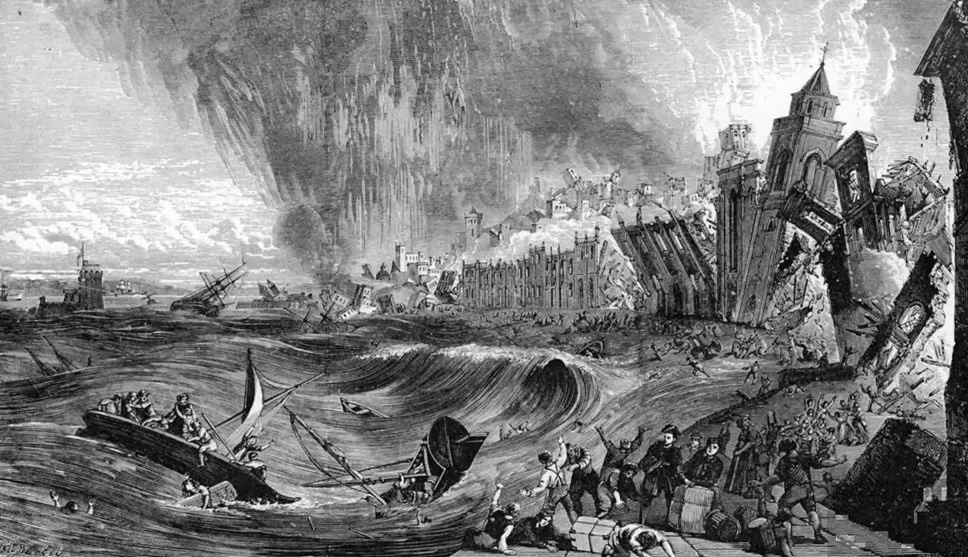
The term Tsunami refers to a sequence of waves associated with the displacement of a large volume of water, almost always generated by the disturbance of the ocean floor due to a violent earthquake. When they reach the coast, tsunamis can cause flooding and damage to large areas.
Although infrequent, there have been several tsunamis that have affected Lisbon in the past, for example following the earthquake of November 1, 1755, when the first wave hit the city around 40 minutes after the earthquake.
Lisbon's riverside strip is exposed to the effects of a tsunami, especially the area between Belém and Santa Apolónia.
Based on the tsunami inundation map, a public address system has been implemented in Lisbon, with sirens in Praça do Império and Ribeira das Naus that will be activated in the event of a tsunami. This system, which will be complemented by signposting of evacuation routes and meeting points, is part of a project coordinated by the Lisbon Metropolitan Area and funded by POSEUR.