


Urban Fauna
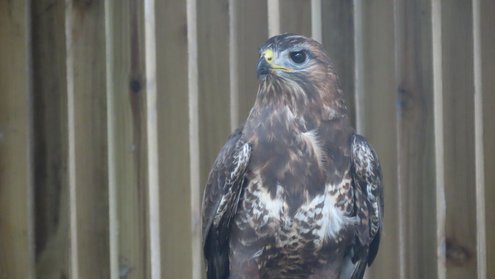
Local wildlife is protected by law for the sake of its conservation, and the keeping of these animals by private individuals is prohibited, as is their disturbance.
Generally adapted to life in an urban environment, wild fauna face increased risks here, which can lead to the need for intervention and referral to a wildlife recovery center. In Lisbon, CRAS receives weakened, sick, injured or illegally captive wild animals and rehabilitates them with a view to reintegrating them into the wild.
Some animals that live in the city, despite living in the wild, are considered exotic because their populations are the result of the inadvertent introduction of individuals from captivity, who have managed to establish themselves in a favorable habitat and climate. This is the case with collared parakeets and other birds from the parrot family, as well as the crested mainas and Florida tortoises. These animals represent a potential ecological imbalance and threat to native species, which must be preserved, so it is illegal to release these species into the wild.
Domestic animals are also part of the urban environment and face increased risks in the urban fabric as well as having an impact on wildlife, so they must be kept under protection and supervision.
If you find an injured or weakened animal:
- Approach with caution, remember that the animal is frightened and may attack
- Cover it so that it cannot see, with a cloth or towel
- Put it in a perforated cardboard box with newspaper at the bottom
- Until delivery, keep the box in a dark, quiet place
If you find a healthy animal:
- Leave it in the same place
- In case of danger to the animal (predators, vehicles, etc.) take it to a safe place nearby
- In case of danger to the population, contact the authorities
PSP/Animal Protection
217 654 242
defesanimal@psp.pt
SEPNA/SOS Ambiente
808 200 520
sepna@gnr.pt
ICNF - Institute for Nature Conservation and Forests
213 507 900
cites@icnf.pt
icnf@icnf.pt
The City Council is carrying out actions that combine prevention with the correction of critical situations:
- creation of a network of contraceptive lofts;
- limiting nesting sites and potential sources of unhealthiness;
- awareness-raising actions;
- intervention to prevent undue feeding of pigeons in public spaces;
- scheduled captures;
- sending samples of captured pigeons to the National Institute for Agrarian and Veterinary Research to test for pathogens, including the "bird flu" virus.
The contraceptive loft at Parque Silva Porto is an innovative concept for controlling the pigeon population. The network will be extended to all of Lisbon's parishes.
Objectives:
- promote comfort, safety and conditions for nesting, by offering food, water and shade, allowing them to fly around the city and return to the loft;
- guarantee a permanent home for them to build their nests;
- ensure that the eggs are removed 2 to 3 days after laying, before the embryo (pigeon) is formed, preventing further births;
- reduce costs, improve landscaping and hygiene.
- transmission of pathogens in birds;
- allergic problems, both respiratory and otherwise;
- transmission of diseases such as Salmonellosis, Cryptococcosis, Ornithosis, especially to children, the elderly and the immunosuppressed.