


Pedestrian accessibility diagnosis
In a collaboration between Lisbon City Council and the Center for Research in Architecture, Urbanism and Design (CIAUD) of the Faculty of Architecture of the University of Lisbon, a study of pedestrian accessibility conditions in the city of Lisbon was carried out in two phases corresponding to two scales of analysis:
First phase - Measurement of pedestrian accessibility in the entire municipal territory, based on the potential pedestrian network, i.e. all the streets where it is possible to walk, represented by their road axis, and thus understood as a potential pedestrian network;
Second phase - Measuring pedestrian accessibility on a neighborhood scale (for a set of 6 pilot areas), based on the pedestrian network of their sidewalks, pedestrian crossings and footpaths, understood as the actual pedestrian network.
With the completion of this phase, it will be possible to assess:
- The disparity in accessibility, i.e. the relationship between potential accessibility and actual accessibility, thus signaling the areas where interventions in the public space will have the greatest impact on increasing pedestrian accessibility;
- Mapping the areas with the highest demand, corresponding to the most requested areas on the calculated origin/destination routes;
- The prioritization of public space requalification interventions that enhance access to proximity functions, on a city-wide scale and in each of its neighbourhoods.
Summary sheets by parish
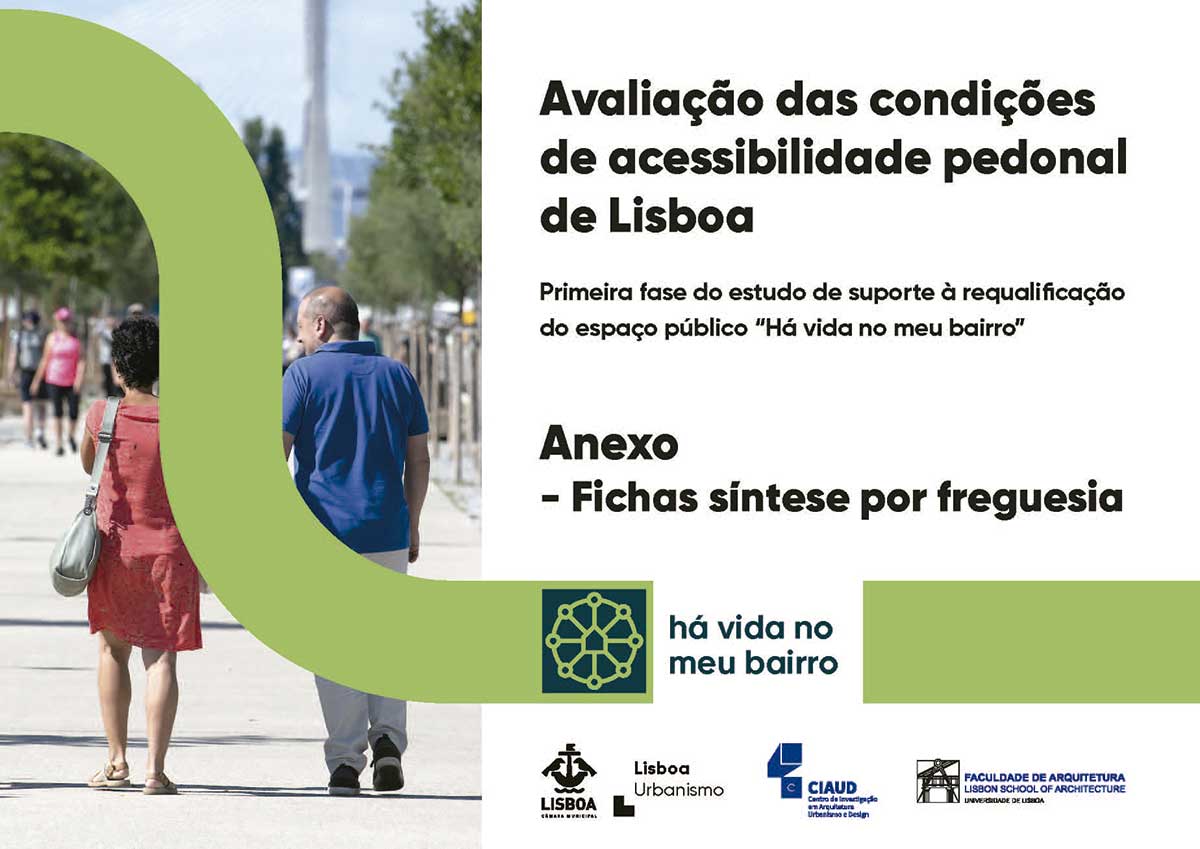
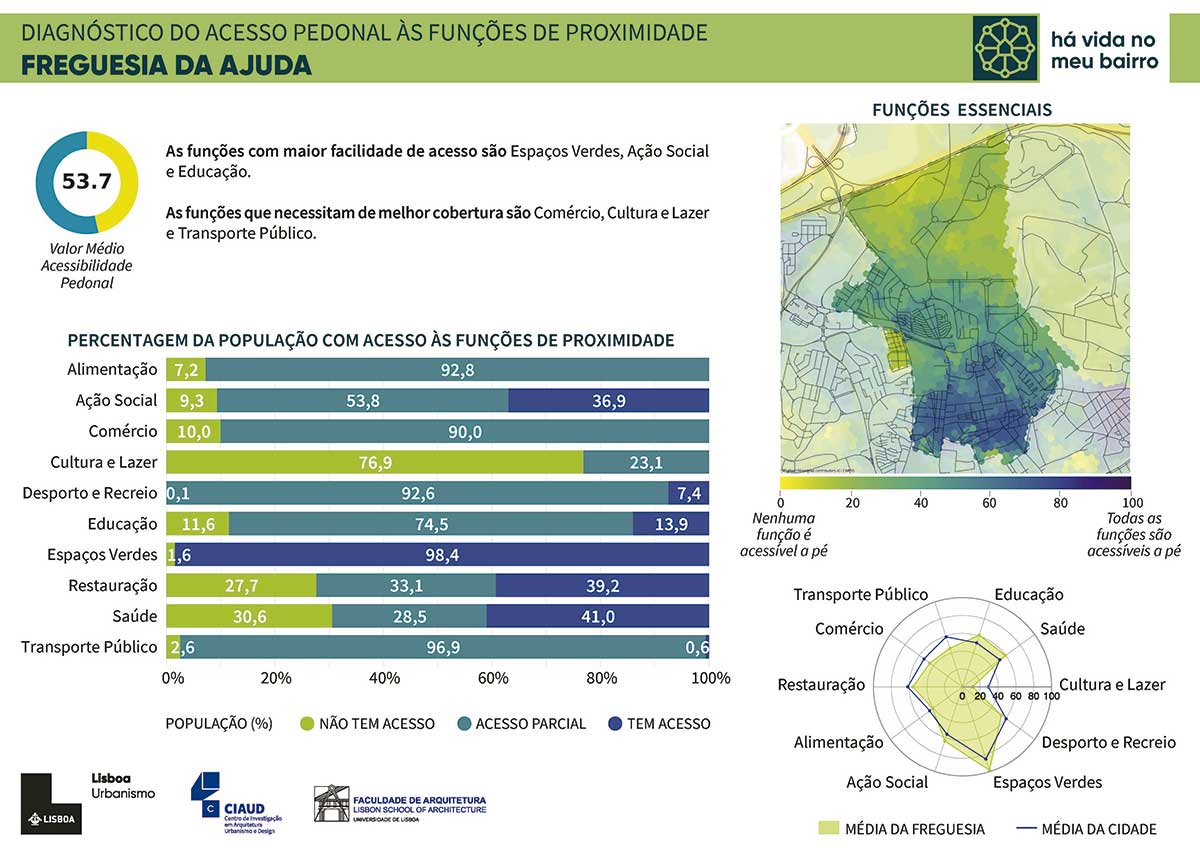
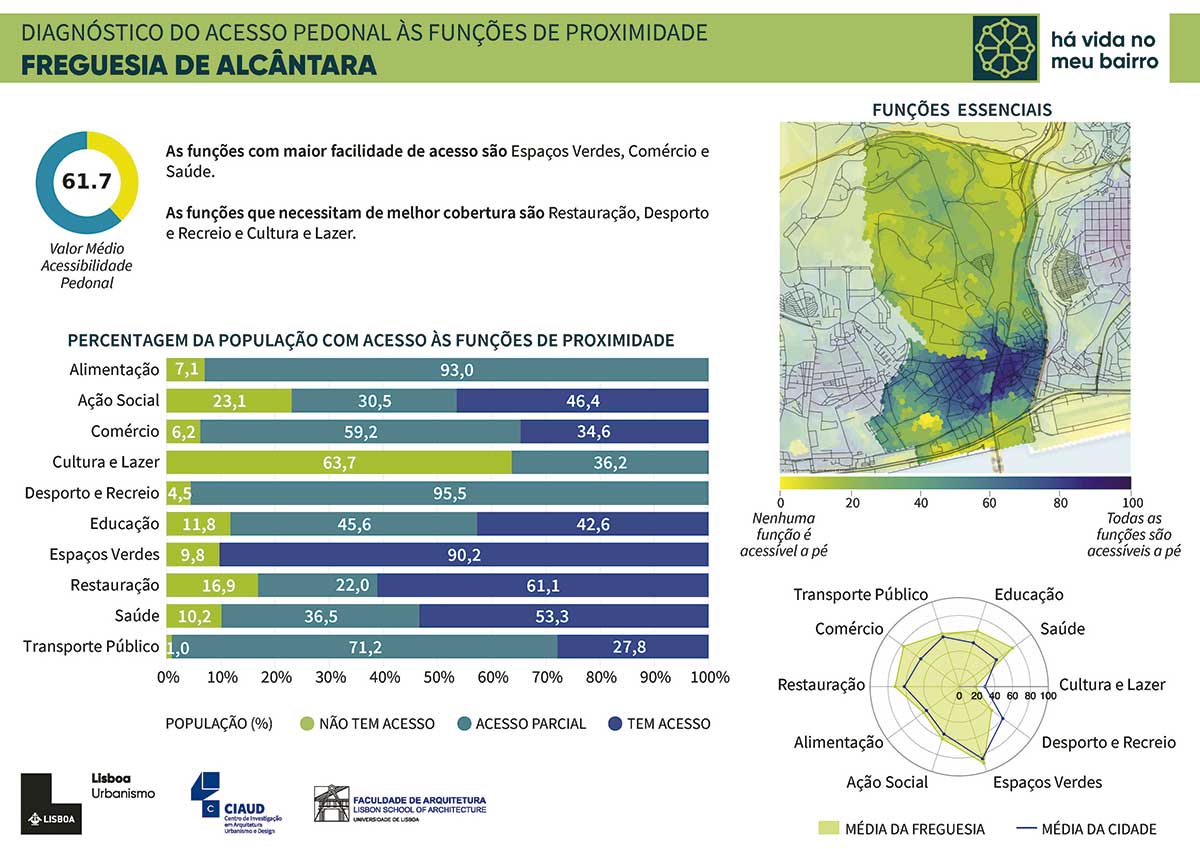
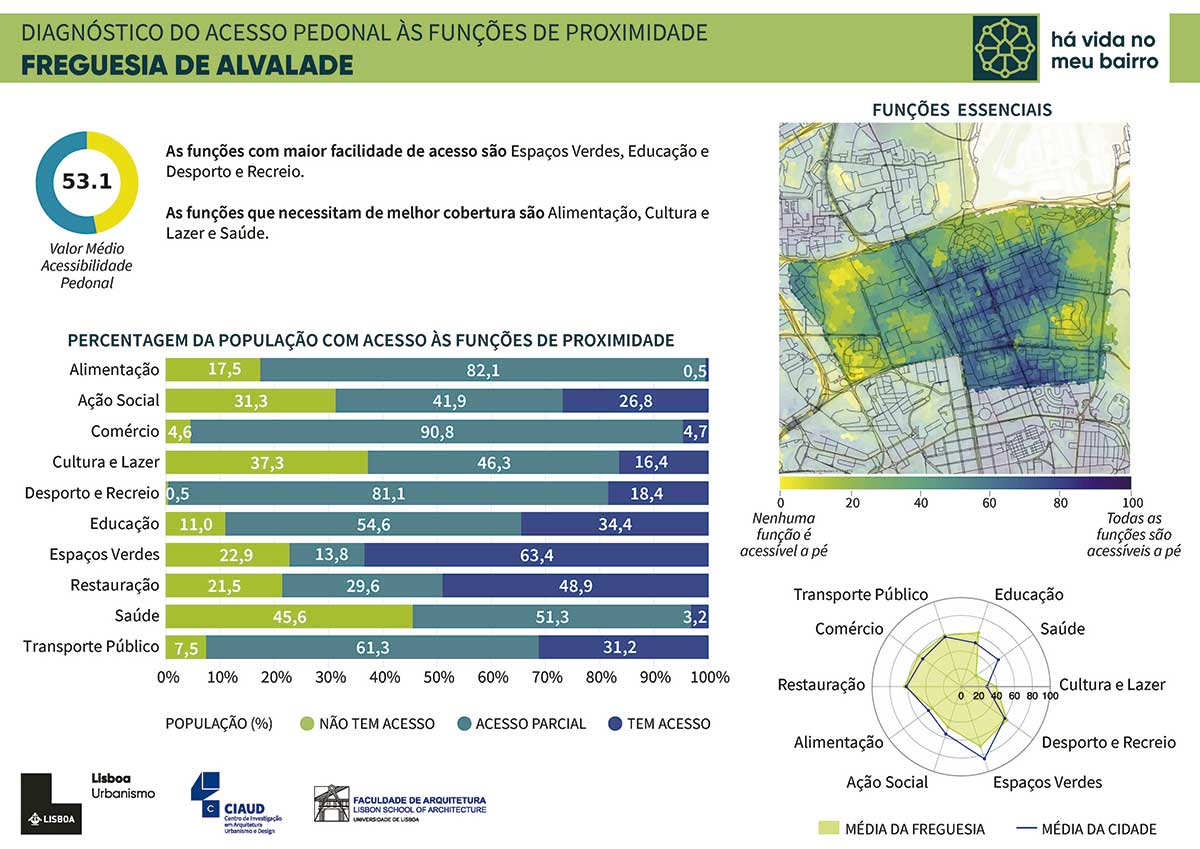
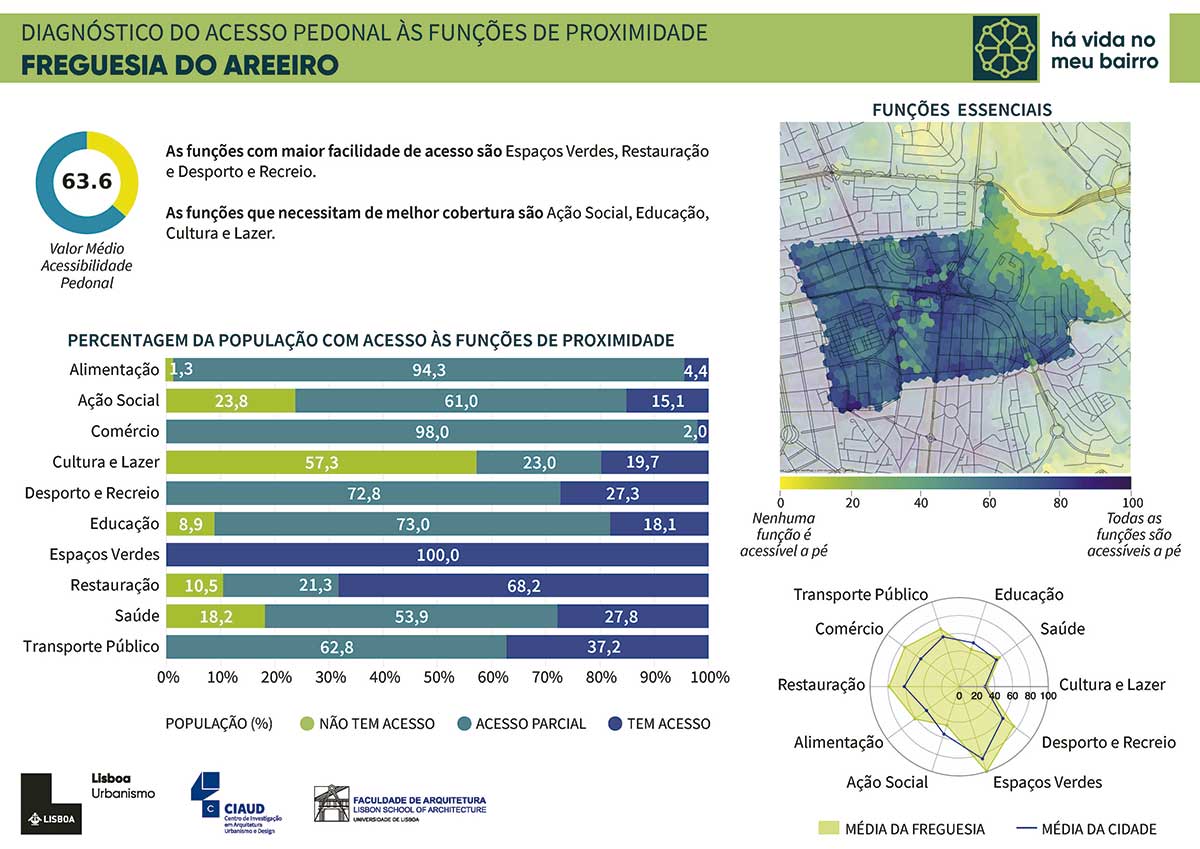
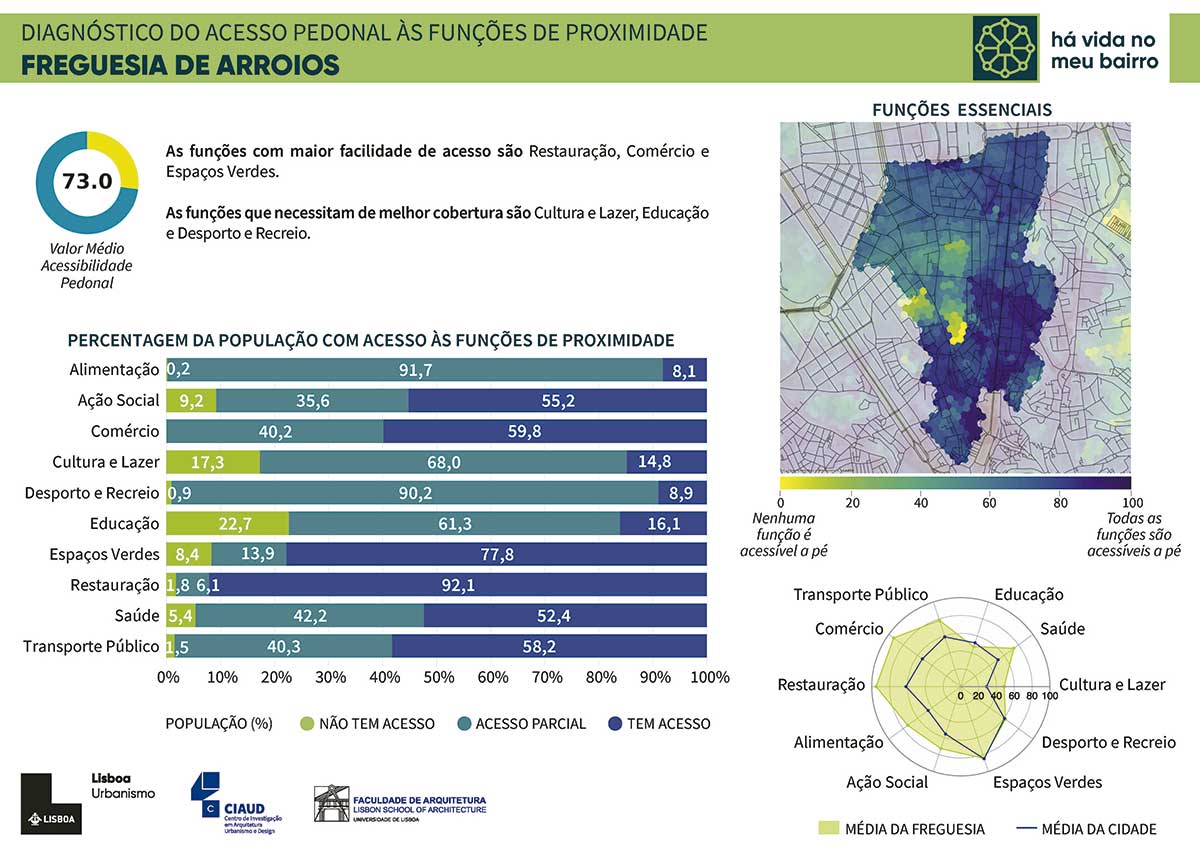
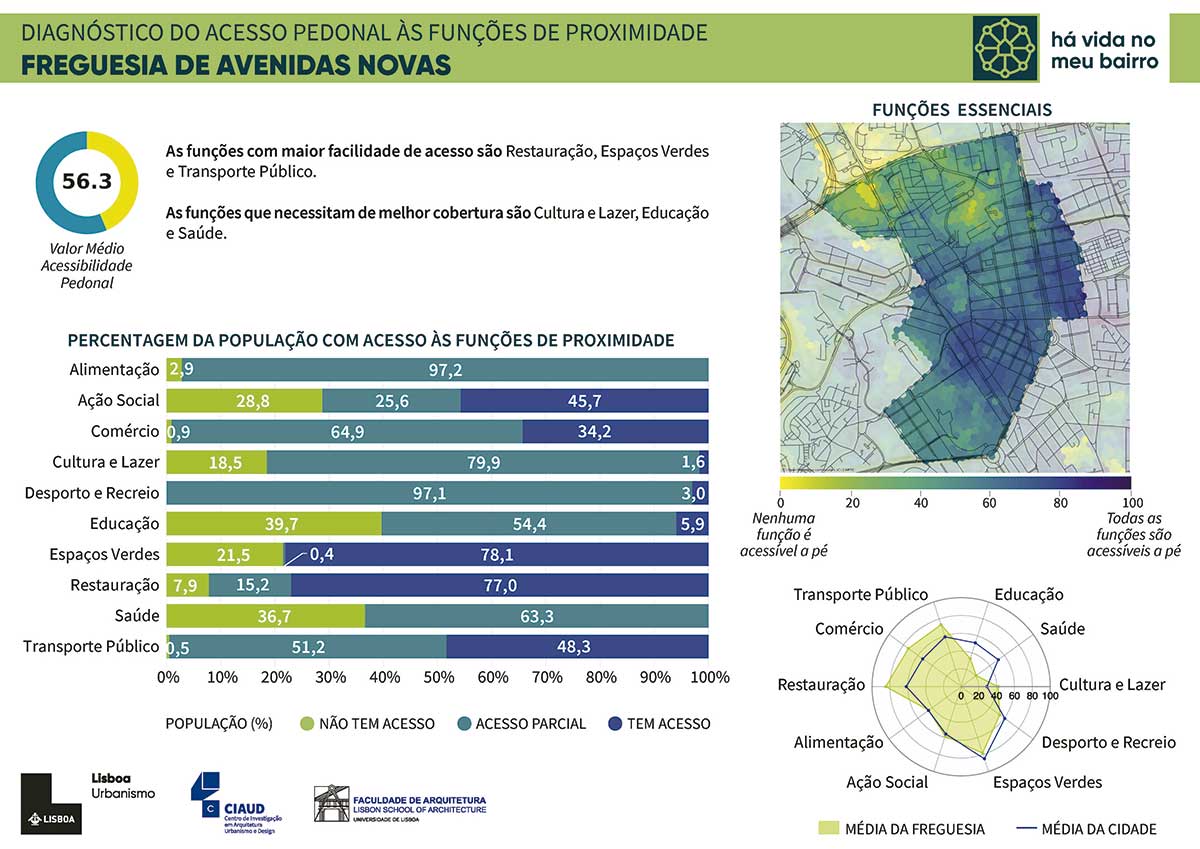
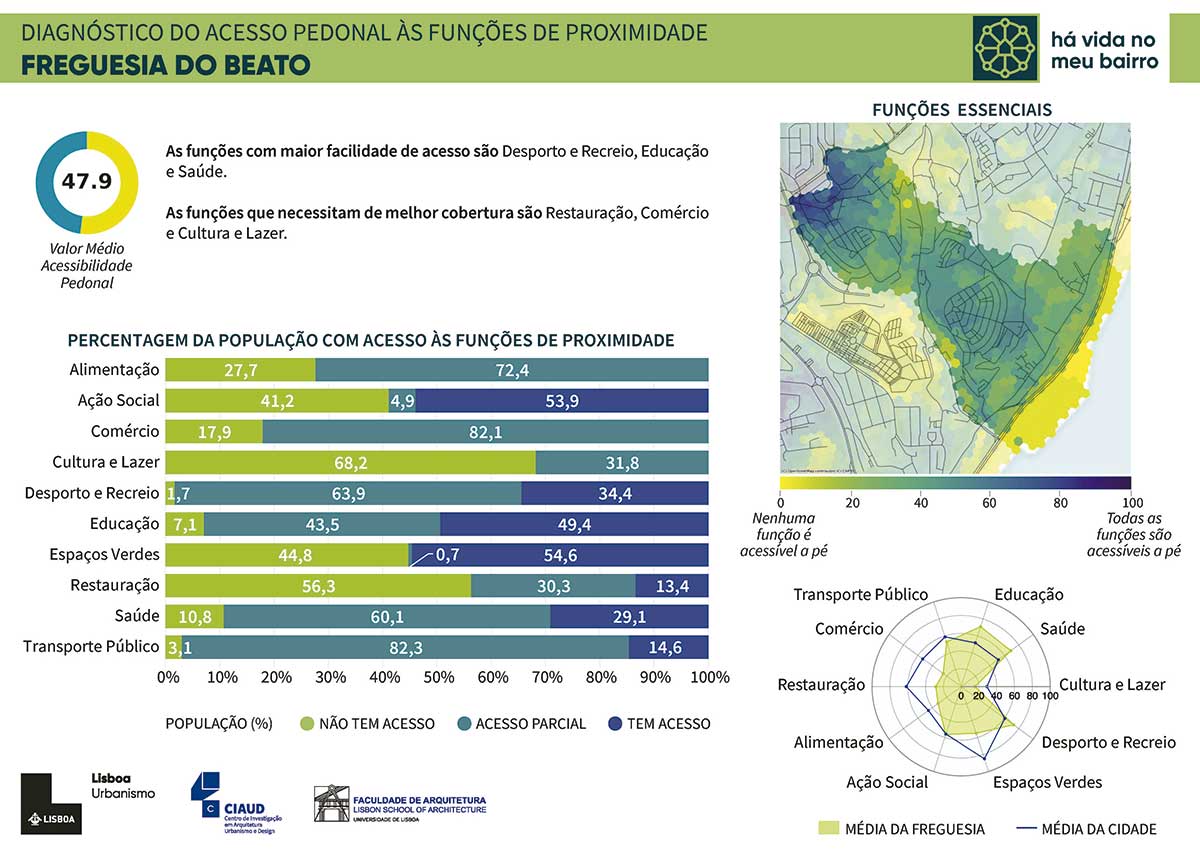
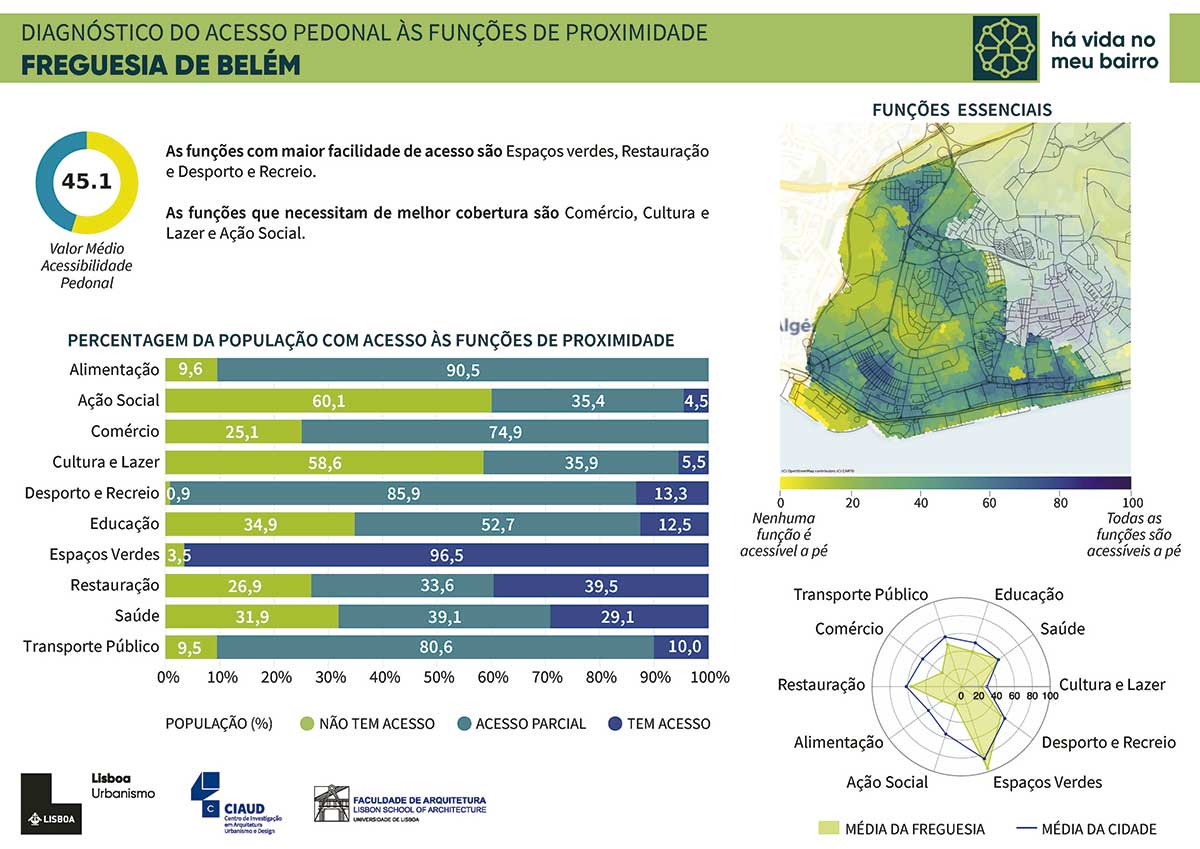
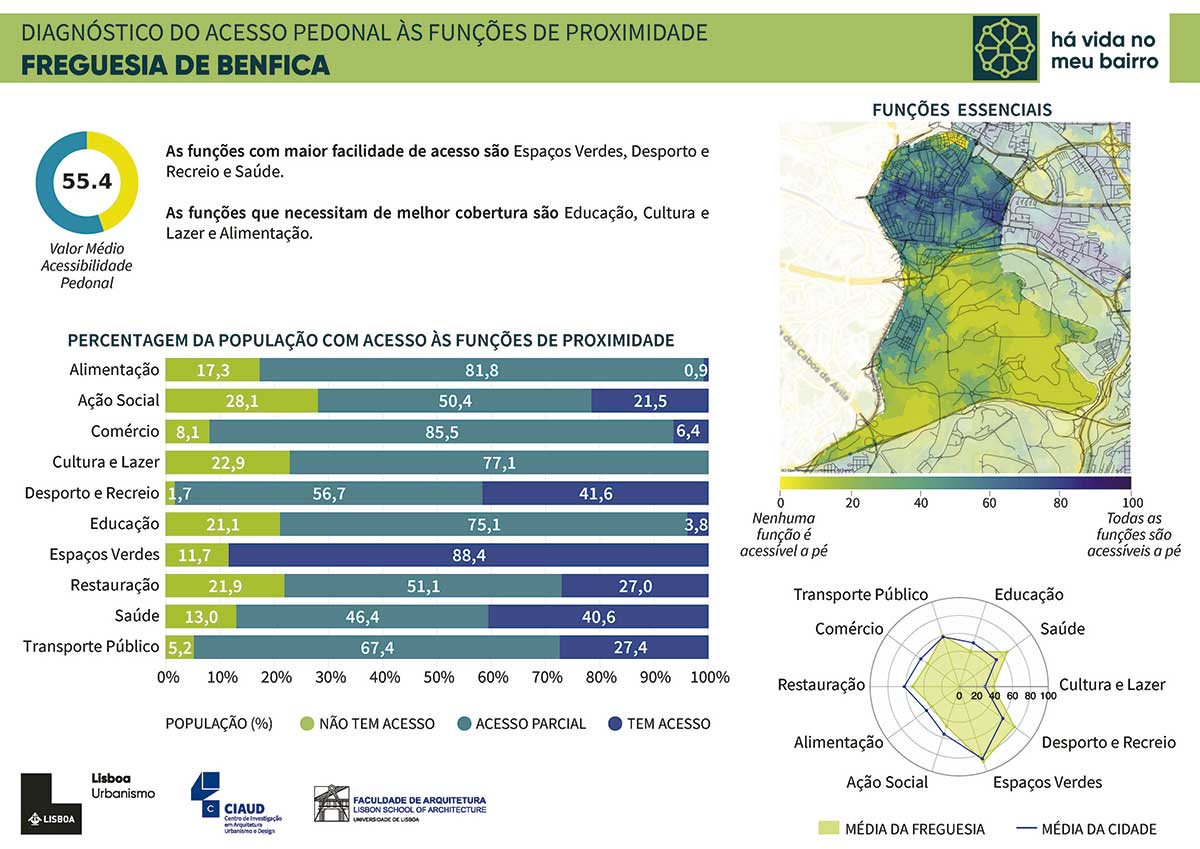
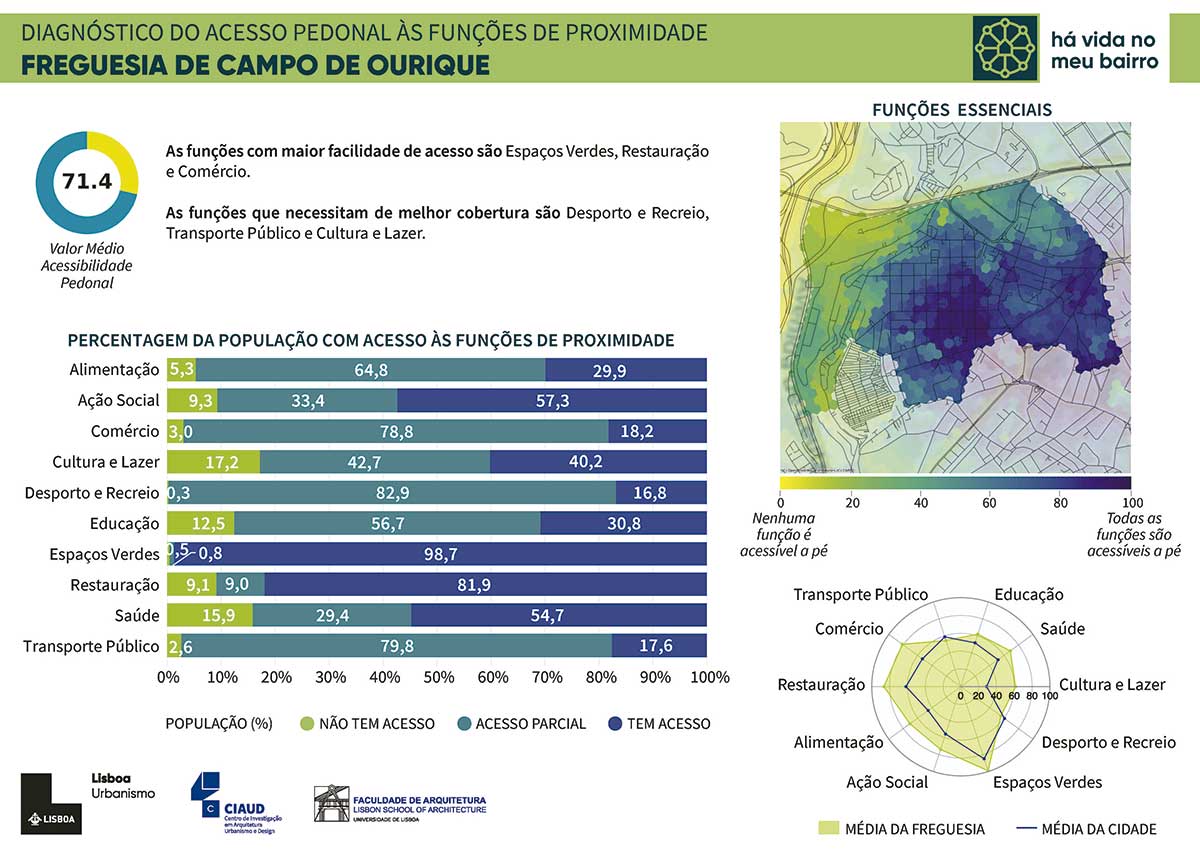
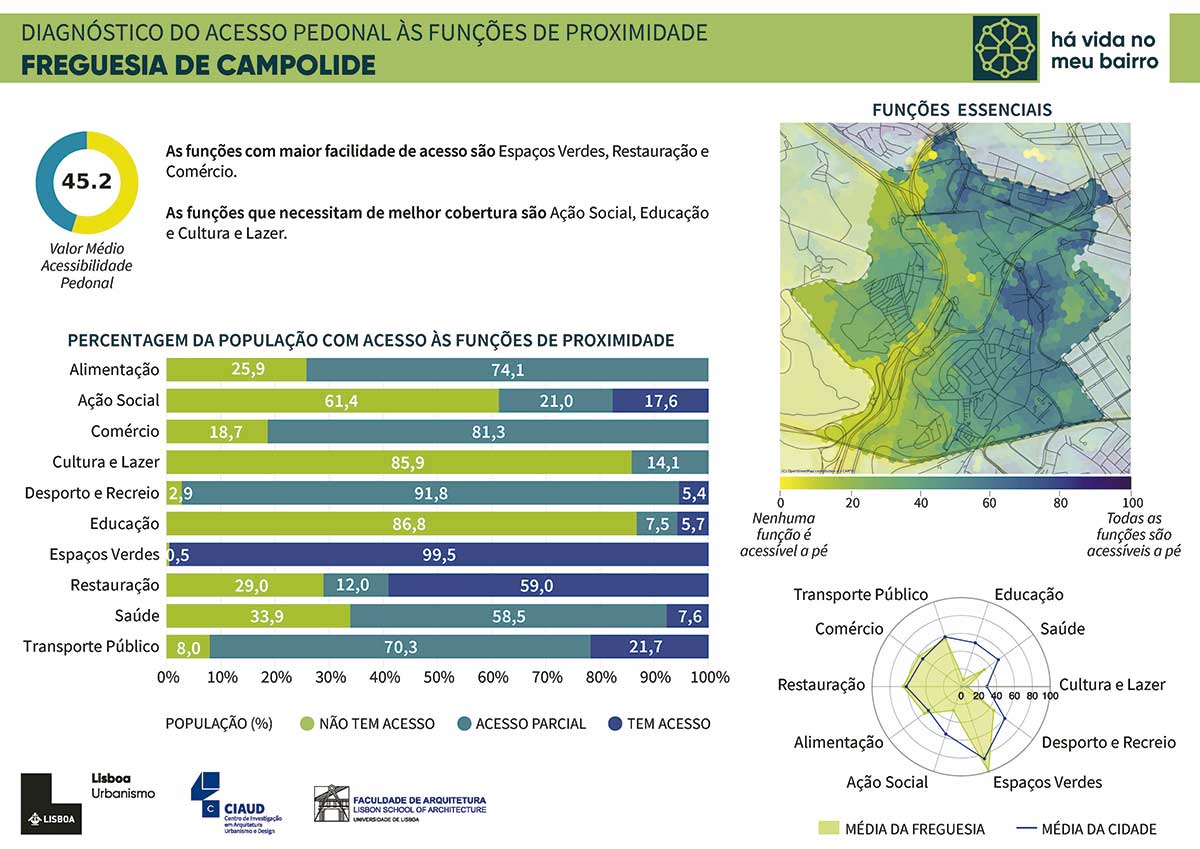
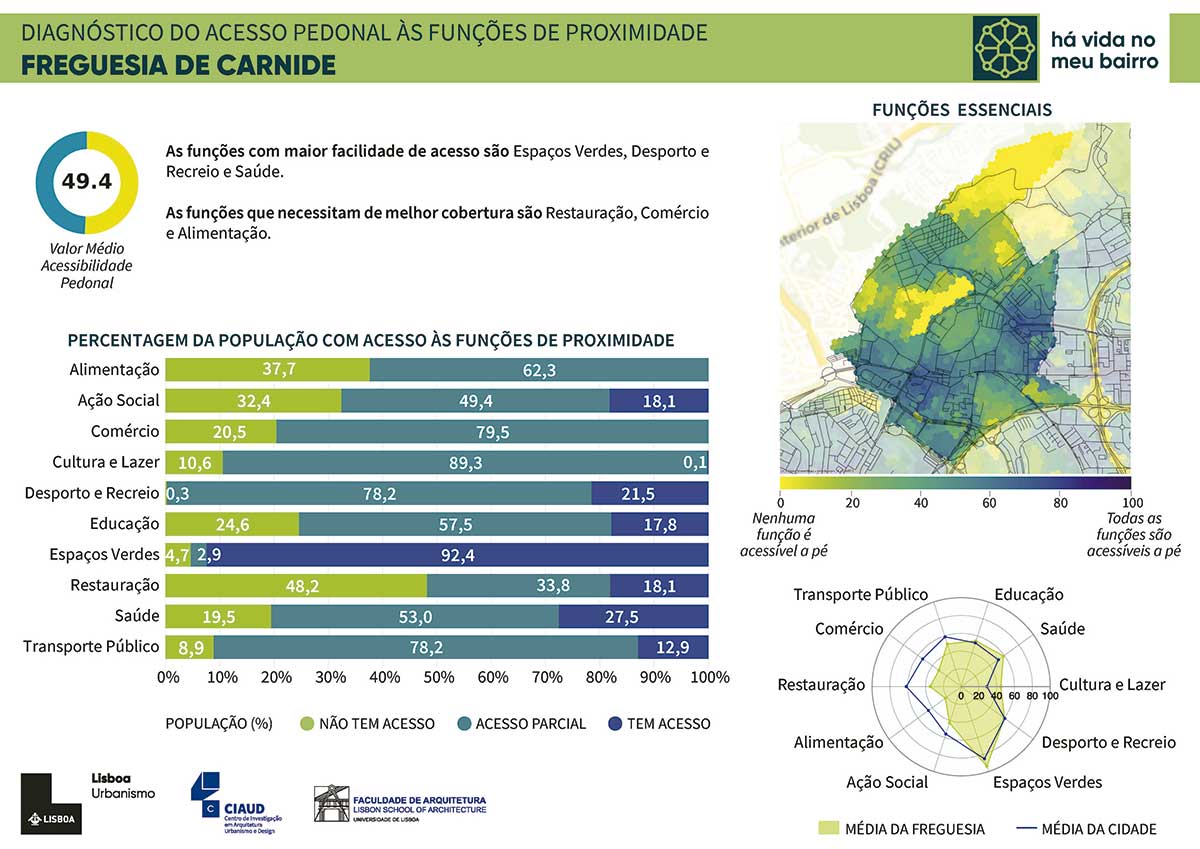
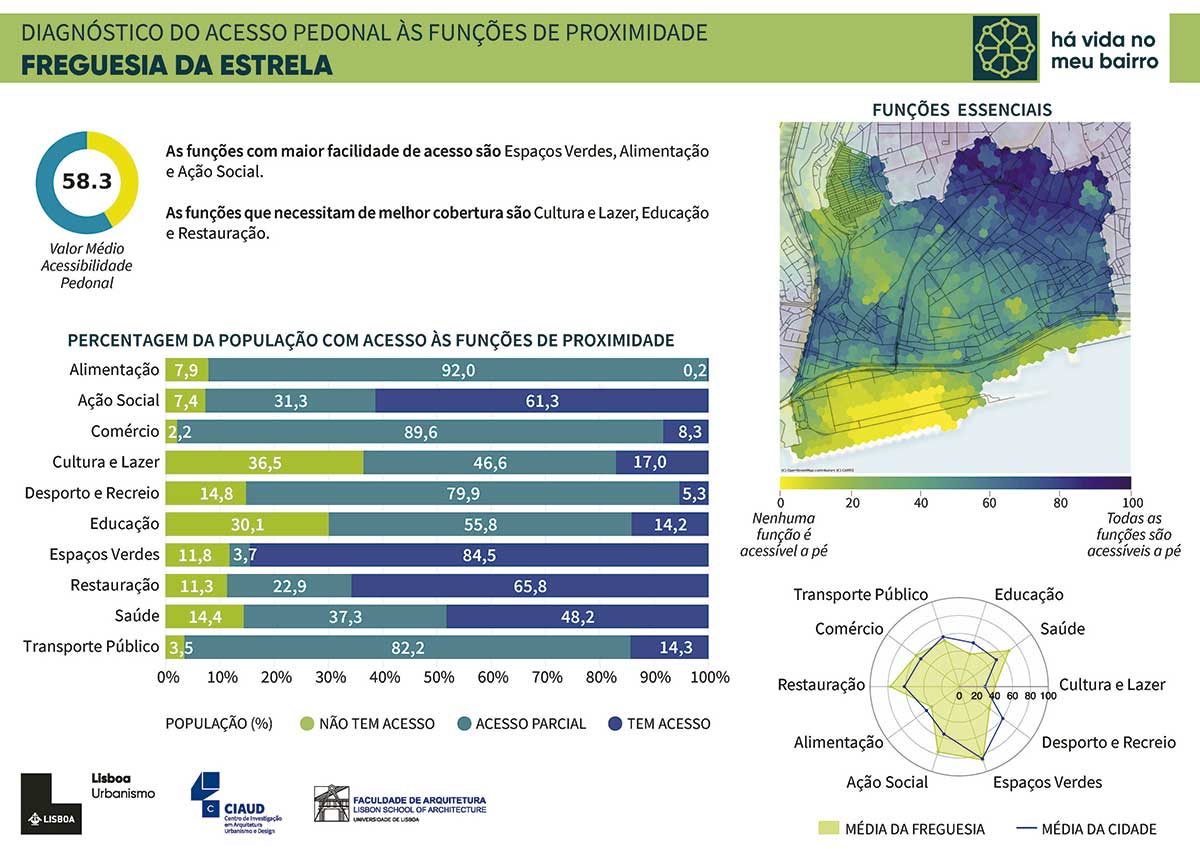
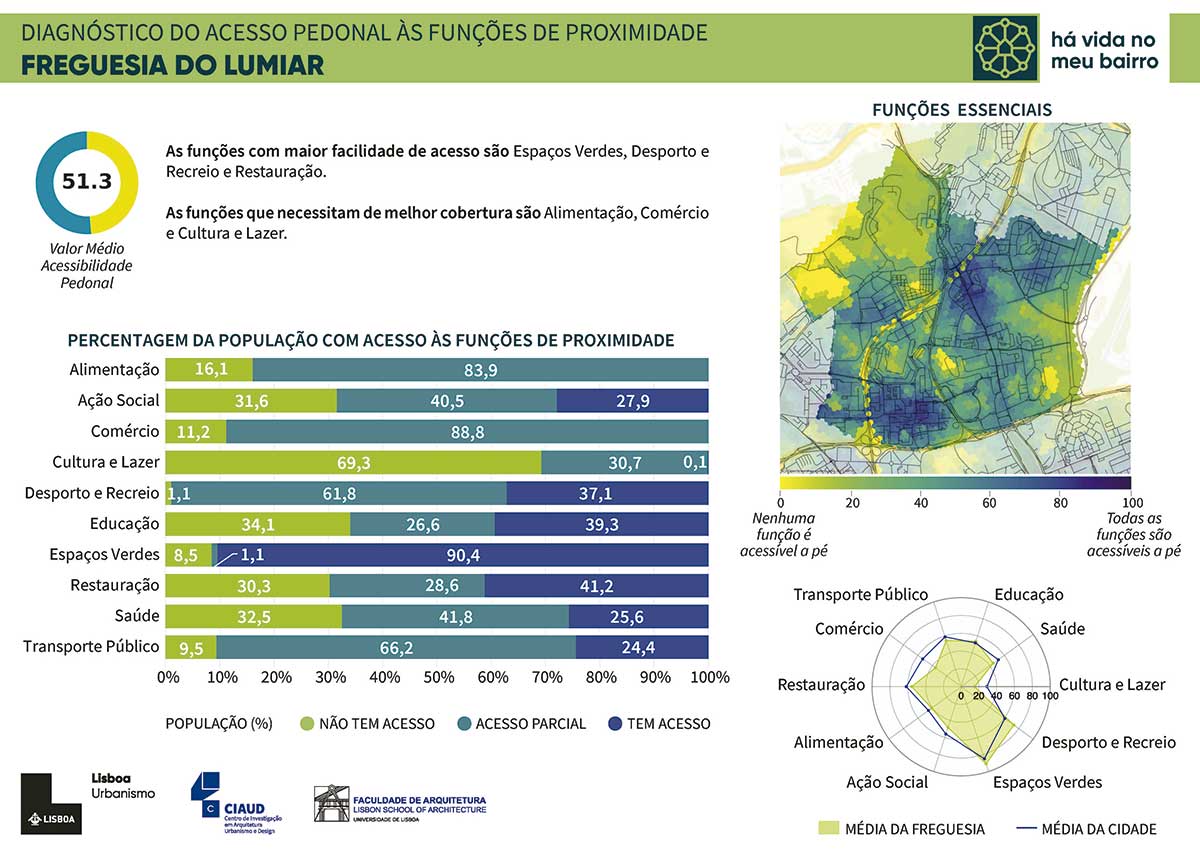
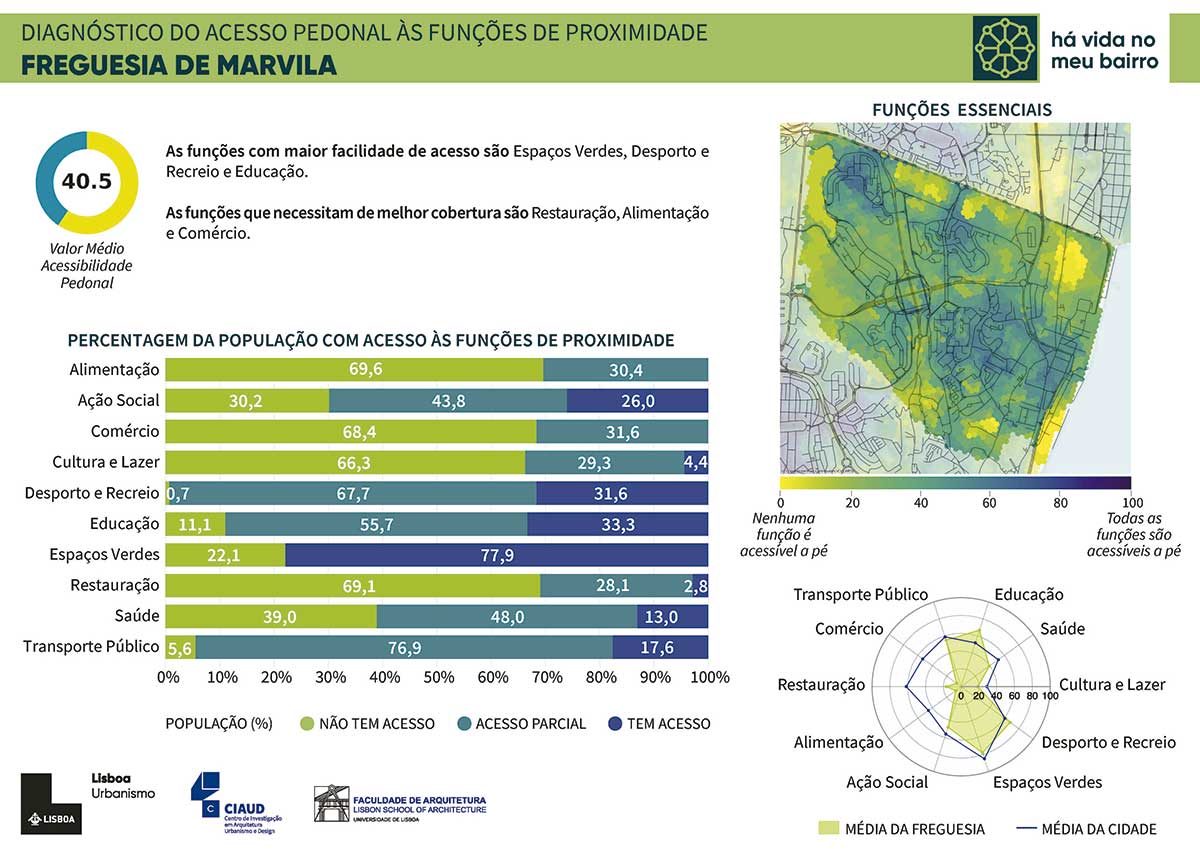
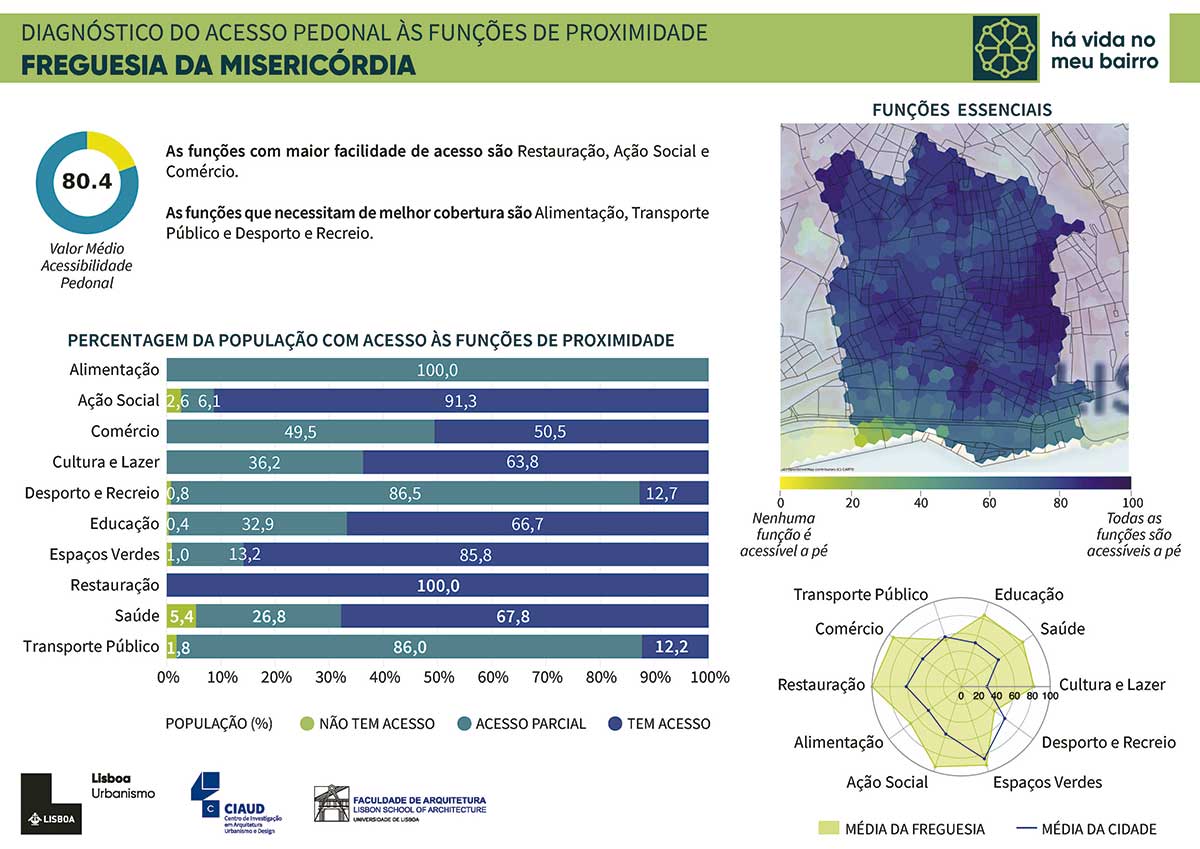
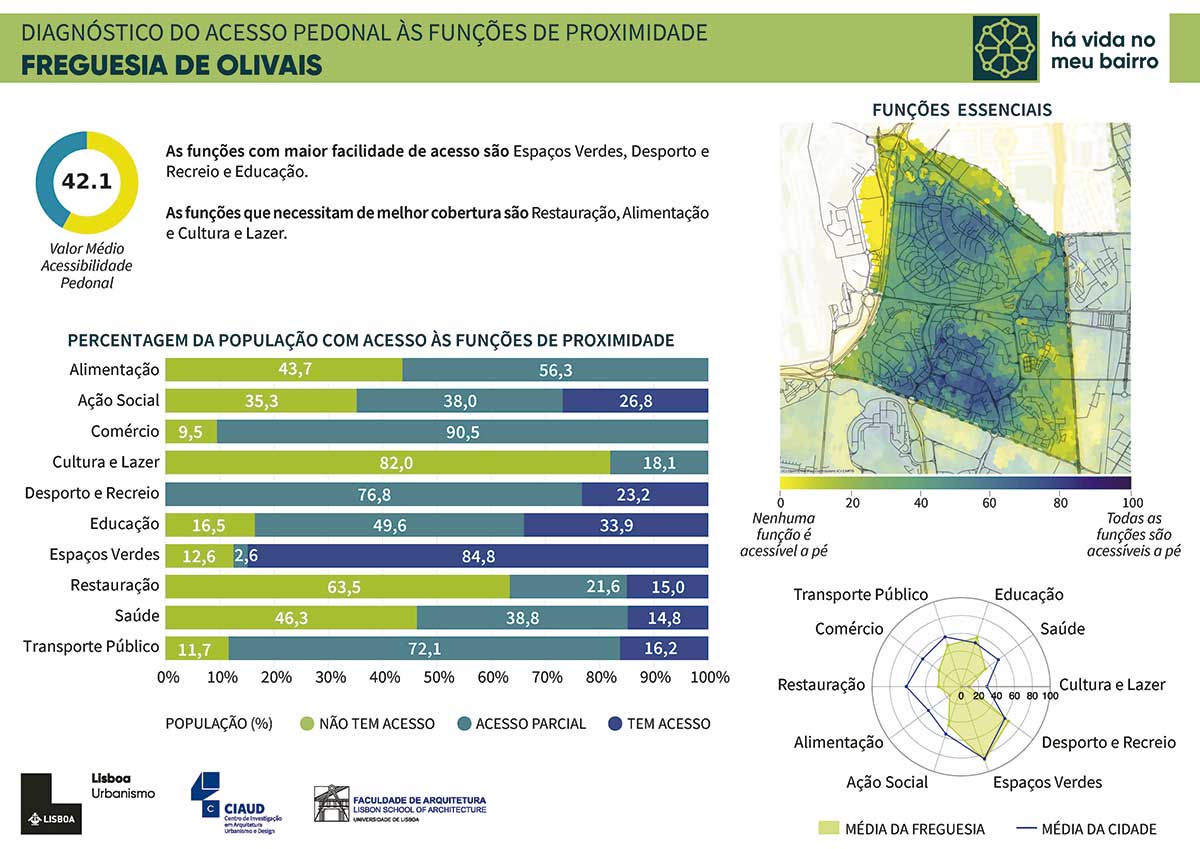
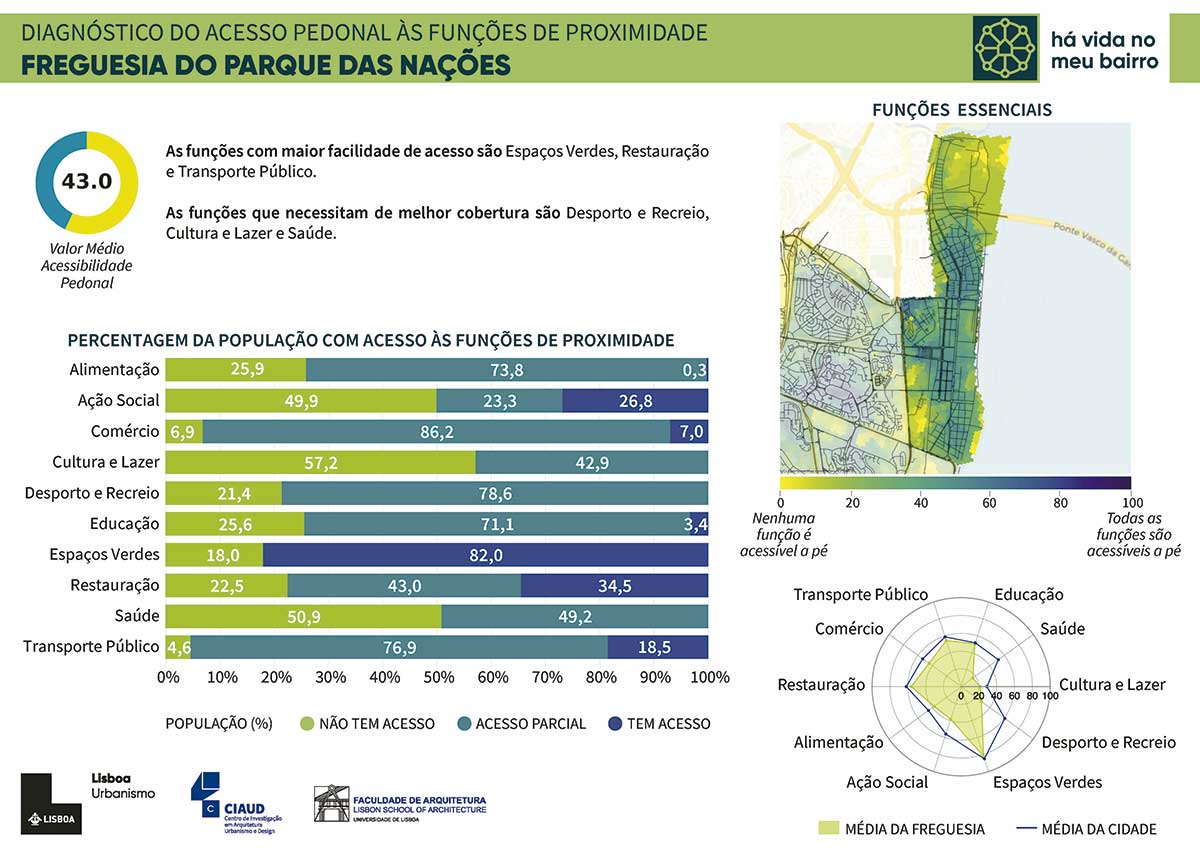
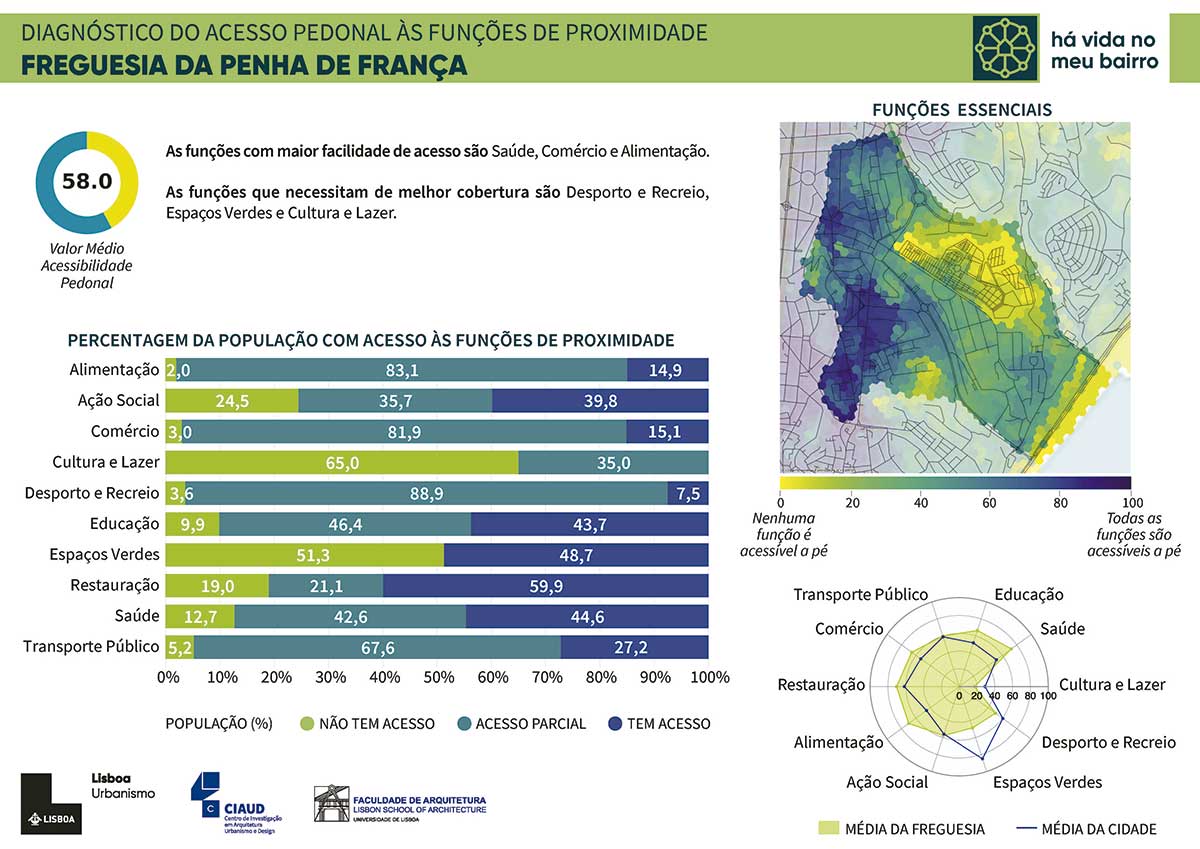
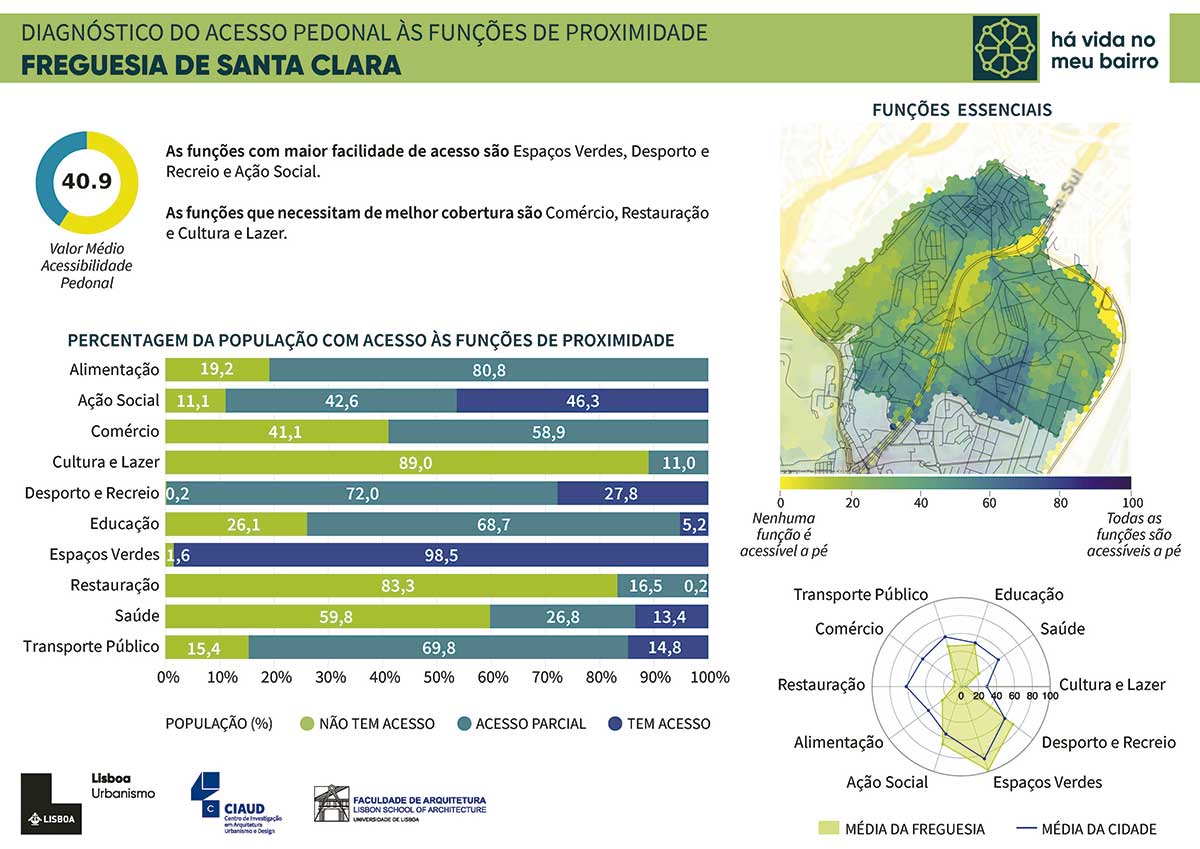
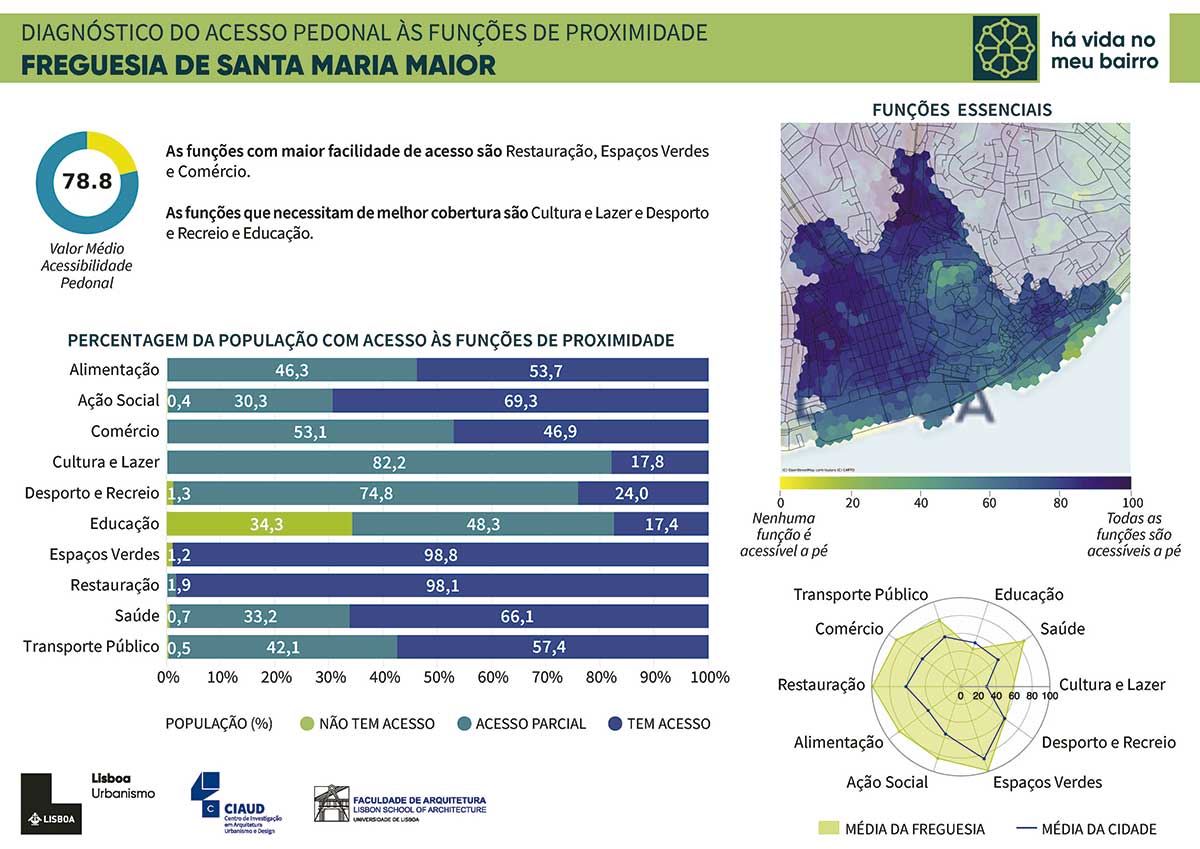
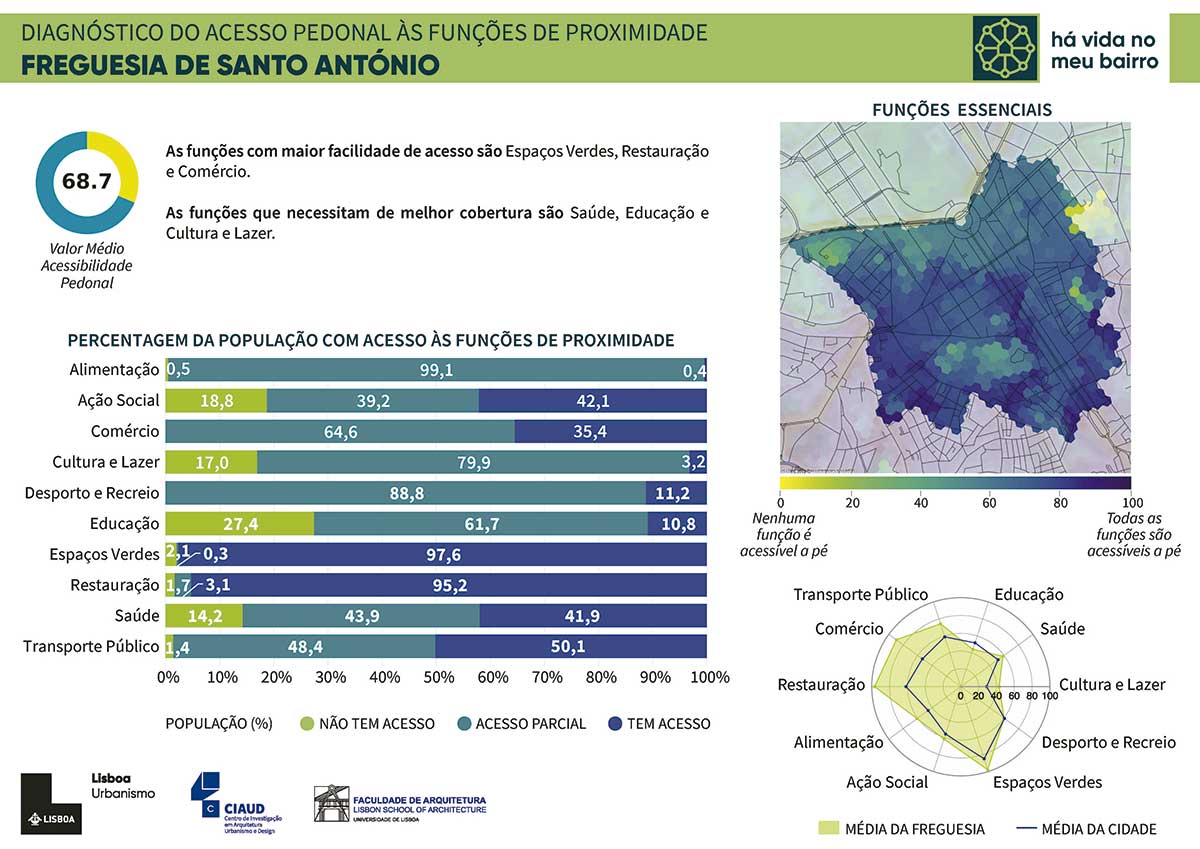
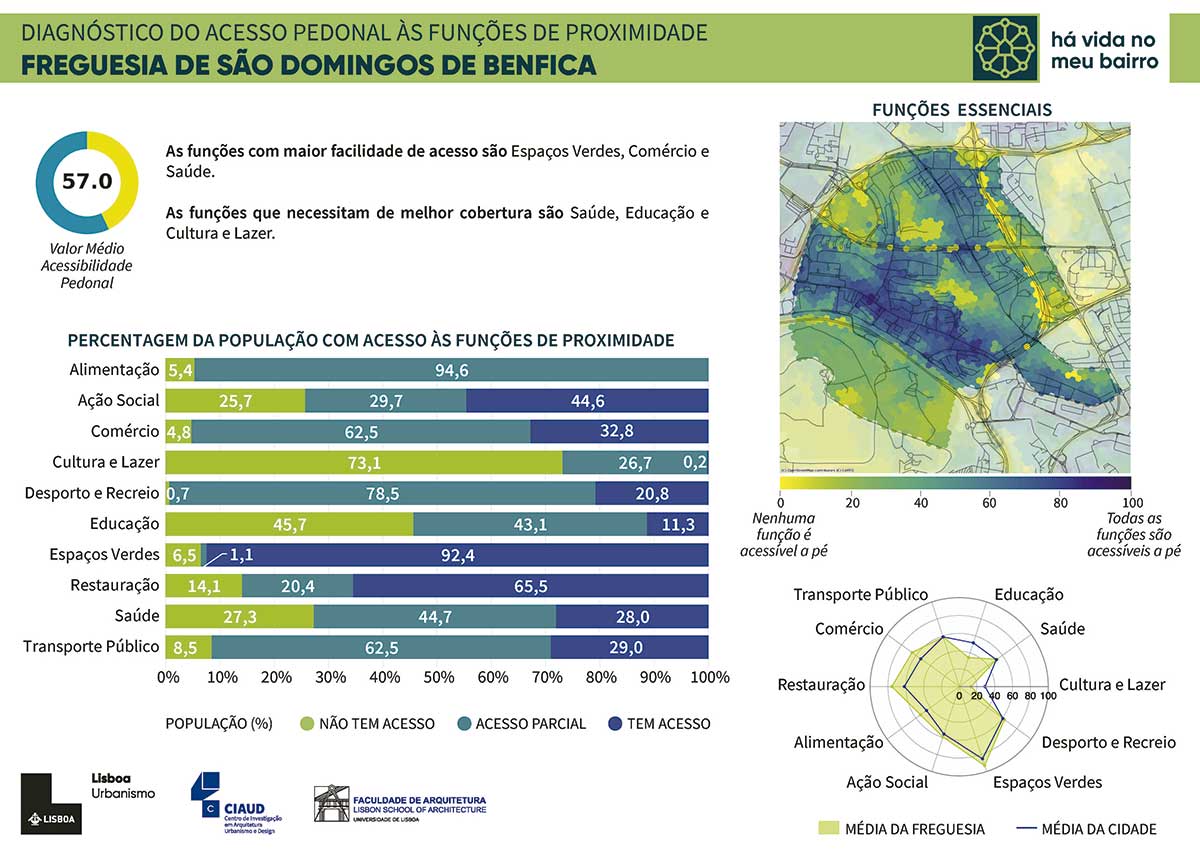
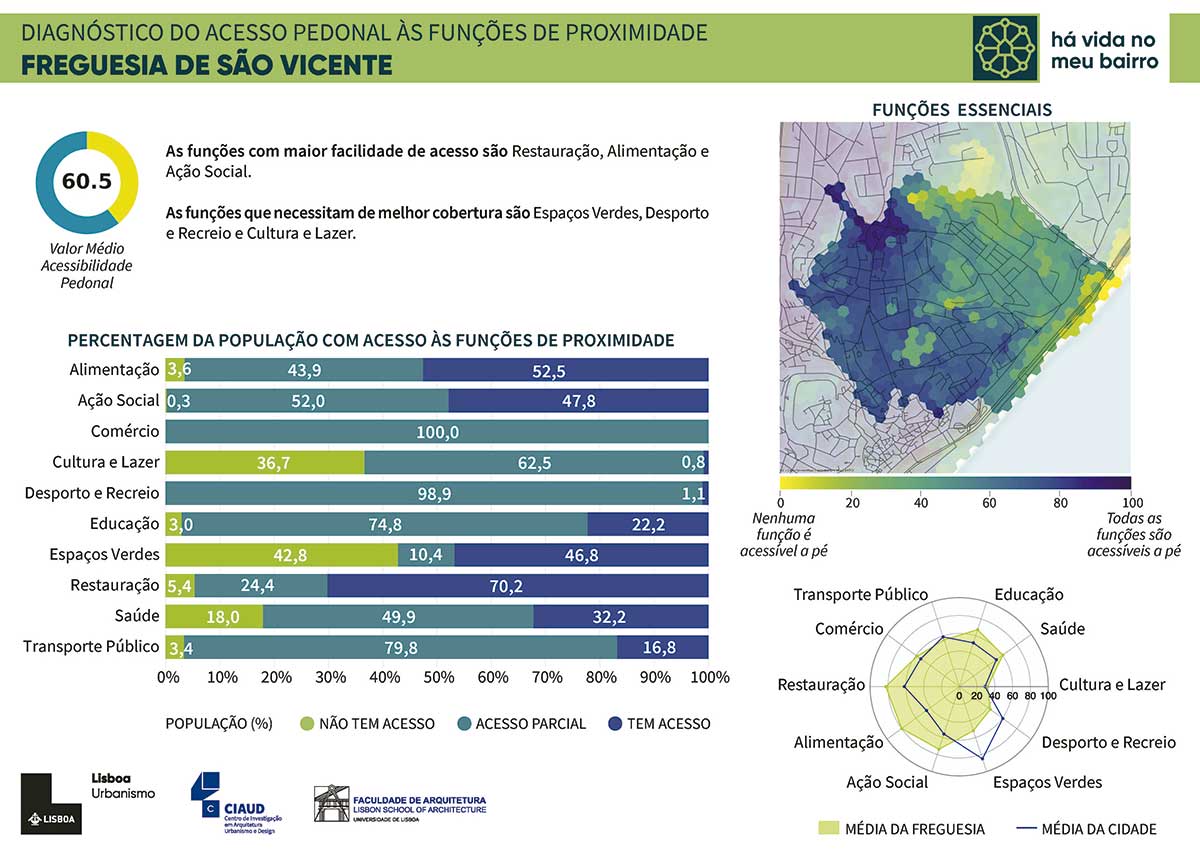
Download the file Summary sheets by parish