


Horticultural parks
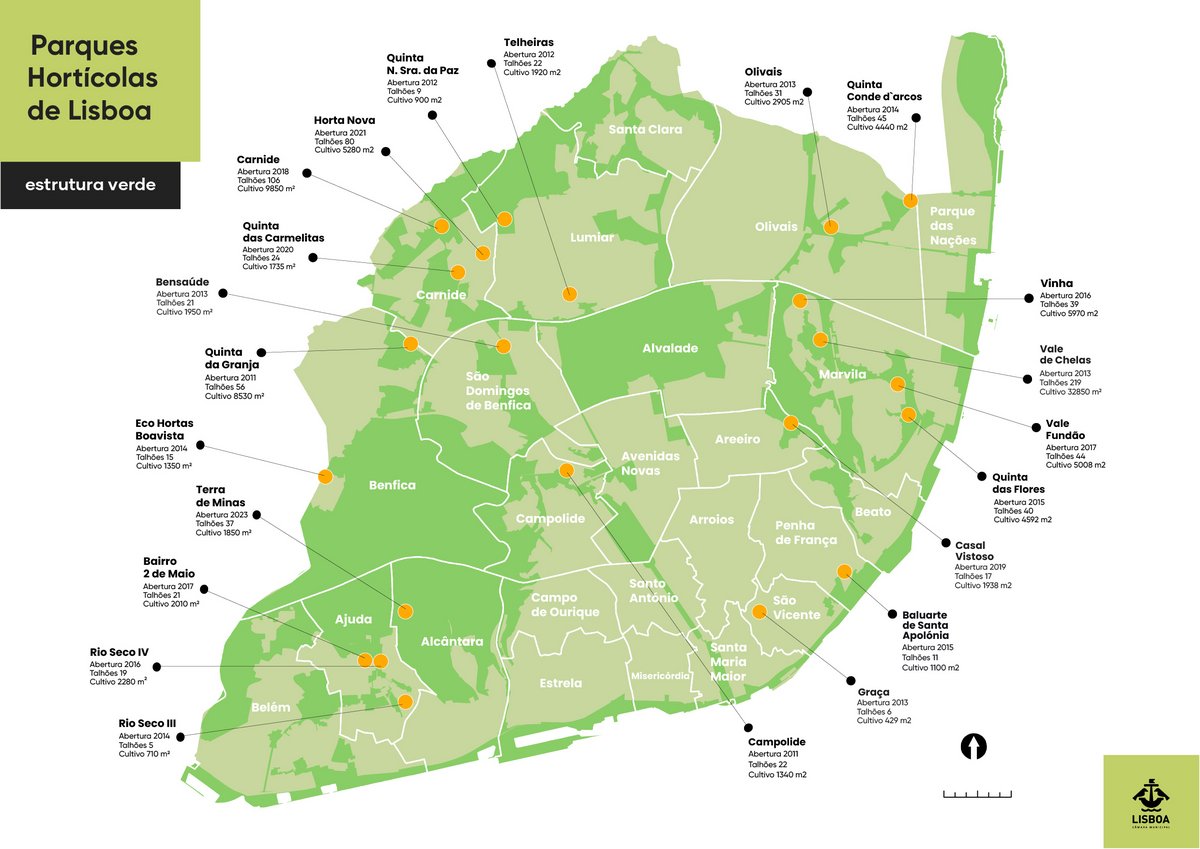
There are currently 22 municipal horticultural parks in Lisbon, 889 plots covering a total of 9.9 hectares for agricultural production.
The gardens provide opportunities for people to grow their own food, promoting urban agriculture and environmental sustainability. These parks not only provide fresh, healthy food, but also promote community interaction, environmental education and the creative use of urban space.
With growing concerns about food security and the environment, horticultural parks are becoming increasingly popular in many cities around the world. In addition to horticultural training (in organic production), permanent technical support is provided to users.
The gardens are part of urban parks and gardens, where other facilities coexist, such as lawn areas, children's playgrounds, kiosk-cafeterias, sports facilities and cycle paths.
Lisbon City Council (CML) reserves the right to adapt these general rules whenever the specific characteristics of the horticultural park justify it, safeguarding that the rules of access and use in force for each horticultural park will always be made available at the time of the call for tenders for the allocation of gardens for each park.
In cases where the implementation of a horticultural park results from the requalification of an area where there was already agricultural occupation (whether legal or not), if the former gardener expresses an interest, CML will directly allocate a vegetable garden, assuming the status of user and being obliged to comply with all the rules of access and use applicable to the respective horticultural park.
Documents available from Environment Periodicals
- Good Practice Guide for Patio and Balcony Gardens-25 Guidelines
- Survey of the Plant Heritage Cultivated in Lisbon's Horticultural Parks
- Good Practice Guide for Urban Agriculture-25 Knowledge
Assessment report on soil, groundwater and horticultural species in urban gardens